
- Home
- What is bisque?
Pottery explained
What is bisque, and what happens in the kiln?
Bisque is pottery that has been fired once and is ready to decorate. It is what you paint when you visit us. Here is the whole journey, from blank piece to glossy finish.
The short answer
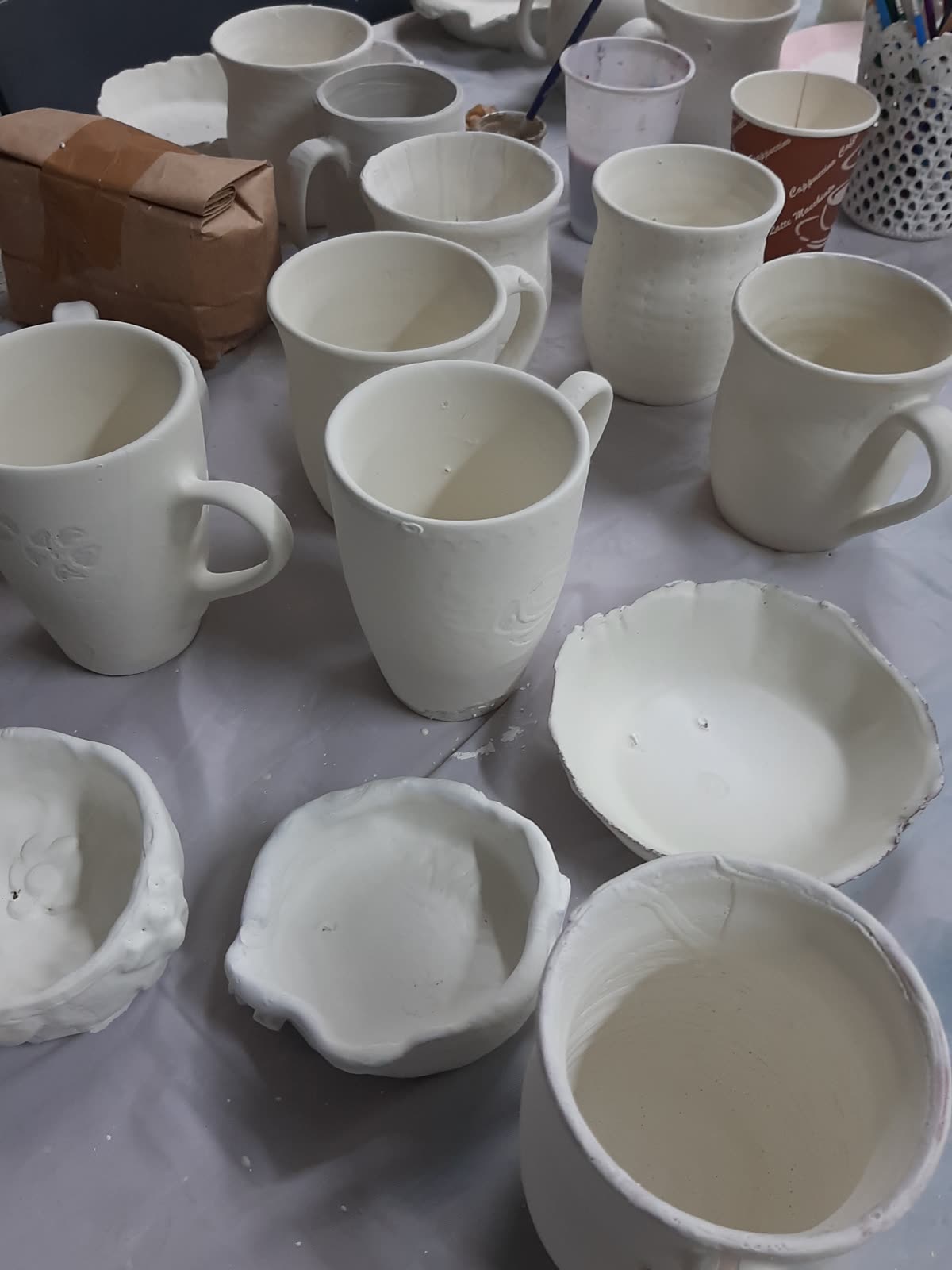
Bisque is the blank canvas of pottery
Clay starts out soft. Once it has been shaped and dried, it goes into a kiln for its first firing. What comes out is bisque, also called bisqueware: hard enough to pick up and handle, but still slightly porous and without any shine.
That porous surface is exactly what you want for painting. It grips the colour, so your brushstrokes stay where you put them.
At The Pottery Boutique, the shelves are stocked with bisque pieces ready to paint. You choose one, paint it, and we take care of the glazing and firing.
From your brush to your shelf
- 1It driesYour painted piece rests on our shelves until the colour is completely dry.
- 2First firingIt goes into the kiln to set your colours. The paint looks soft and chalky when you leave. The heat brings it to life.
- 3GlazingWe coat every piece by hand in a clear glaze. It goes on cloudy and fires to a glossy finish.
- 4Second firingBack into the kiln, which heats slowly and cools slowly before we can open it.
- 5We WhatsApp youUsually 2 to 3 weeks after you paint, your piece is ready to collect.
Pottery words
A short glossary
The terms you will hear around the studio, in plain language.
Greenware
Clay that has been shaped and dried but not yet fired. It is fragile at this stage.
Bisque
Clay that has been fired once. Hard, porous and ready to paint.
Underglaze
The coloured paint used to decorate bisque. It goes on matt and pale.
Glaze
A coating that melts in the kiln into a glassy layer, sealing the piece and making it shine.
Kiln
The oven that fires pottery. It reaches very high temperatures and must heat and cool slowly.
Slab building
Making a piece from flat, rolled-out sheets of clay that are cut and joined.
Coil work
Building a piece up from long rolls of clay, layer by layer.
Wheel work
Shaping clay on a spinning pottery wheel, also called throwing.
Good to know
Bisque and firing questions
What is bisque?
Bisque, also called bisqueware, is clay that has been fired once in a kiln. It is hard enough to handle but still porous and unglazed, which makes it the ideal surface to paint.
Why do you paint on bisque instead of raw clay?
Raw clay is fragile and breaks easily. Bisque is strong enough to hold and paint, and because it is porous it takes colour well.
What is the difference between underglaze and glaze?
Underglaze is the colour you paint with. Glaze is the clear coat that goes over it and melts in the kiln into a smooth, glossy surface that seals the piece.
Why does my paint look pale before firing?
Underglaze colours look soft and chalky when they go on. The heat of the kiln and the clear glaze on top bring out their full depth and shine.
How many times is a piece fired?
At our studio, a piece you paint is fired once to set your colours, then glazed and fired again. The bisque itself was already fired once before you painted it.
Why does it take 2 to 3 weeks?
A kiln has to heat up slowly and cool down slowly, so each firing takes time, and we fire when the kiln is full. With drying, two firings and hand glazing in between, 2 to 3 weeks is normal.
Where can I paint bisque in Mossel Bay?
At The Pottery Boutique, 49 Marsh Street, Mossel Bay. Walk in on Monday, Tuesday or Thursday afternoon or on Saturday and choose a bisque piece from R100.
Now come and try it
Choose a bisque piece from our shelves and paint it. We will handle the kiln.